
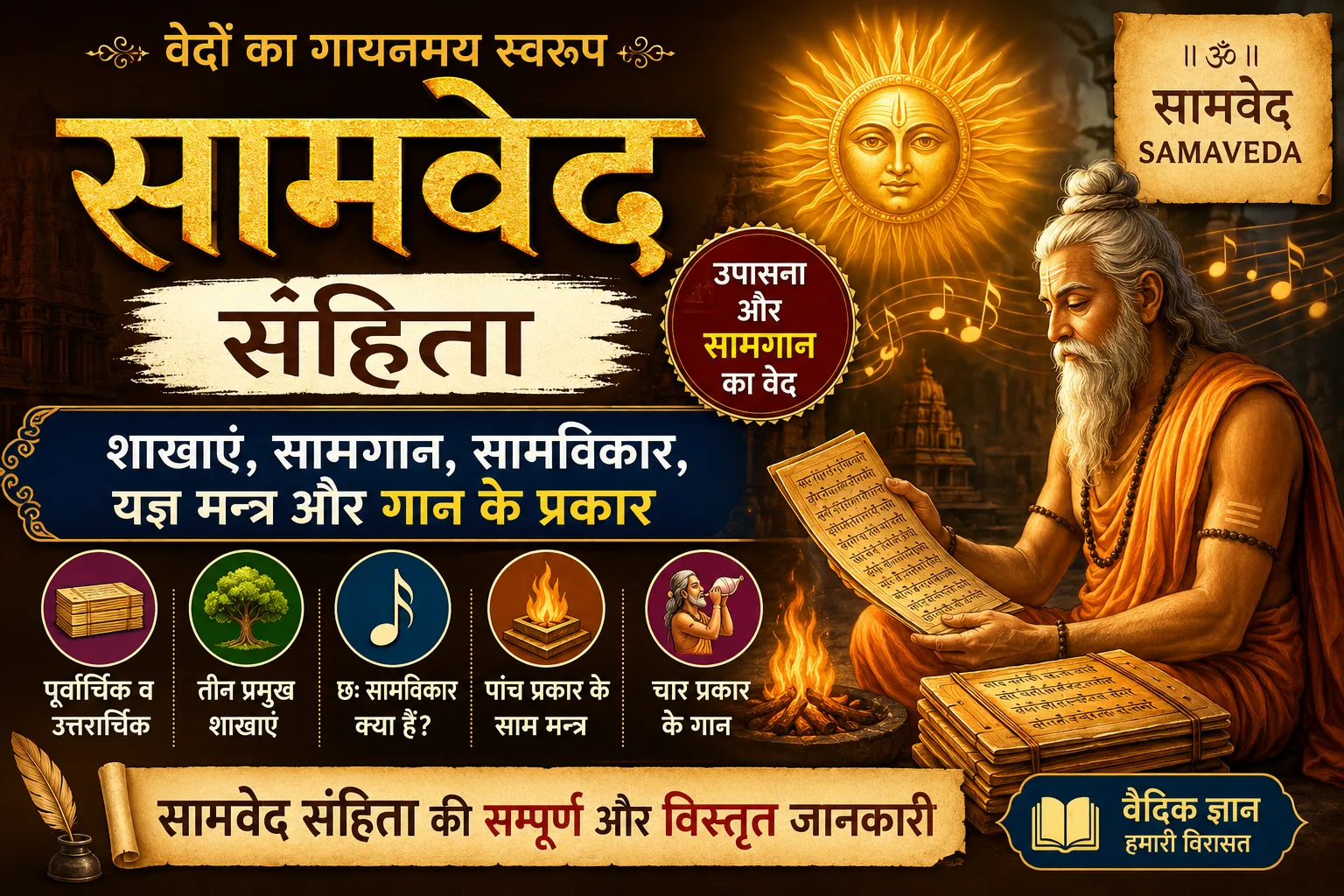
Samaveda Samhita: Meaning, Branches, Chanting System & Rituals Explained: सामवेद की सम्पूर्ण जानकारी, पूर्वार्चिक, उत्तरार्चिक एवं सामगान प्रकार, सामवेद संहिता एवं उसकी शाखाएं, प्रतियोगी परीक्षाओं हेतु महत्वपूर्ण तथ्य।
सामवेद संहिता :-
सामवेद का ऋत्विक उद्गाता तथा देवता सूर्य है अर्थ है। साम शब्द का शाब्दिक अर्थ ‘गान‘ है। सामवेदीय मन्त्र खूब विशेष गान-पद्धति से गाये जाते जाते है तो उनको साम कहा जाता है। सामवेद का प्रमुख विषय उपासना है। सामवेद को दो भागों में विभक्त किया गया है।
- पूर्वार्चिक
- उत्तरार्चिक
पूर्वाचिक में अग्नि और इन्द्र से सम्बद्ध मन्त्र है। जबकि उत्तरार्चिक में प्रत्येक मन्त्र को लय तान को याद करने का वर्णन विद्यमान है।
सामवेद संहिता के पूर्वार्चिक में 650 ऋचाएं हैं। प्रर्वार्चिक के प्रथम प्रपाठक में अग्नि आने से संबंधित ऋग्वेदीय मन्त्र है इसलिए इसे आग्नेय काण्ड कहा जाता है। दूसरे से चतुर्थ प्रपाठक तक इन्द्र सम्बन्धी मन्त्र है। अतः यह “ऐन्द्र पर्व” कहलाता है। पंचम में सोम से सम्बन्धित मन्त्र हैं इसलिए इसे ‘पवनाम पर्व’ कहा जाता है। सामवेद की सहस्त्रों शाखाएं बतलायी गयी है। लेकिन इस समय केवल तीन शाखाएं ही उपलब्ध होती है।
- कौथुमीय शाखा
- राणायनीय शाखा
- जैमनीय शाखा
Explained in English
Samaveda Samhita :-
The *Ritvik* (priest) associated with the Samaveda is the *Udgata*, and its presiding deity is Surya (the Sun). The literal meaning of the word *Sama* is ‘song’ or ‘chant’. When the mantras of the Samaveda are sung according to a specific, distinct method of chanting, they are referred to as *Sama*. The primary subject matter of the Samaveda is worship (*Upasana*). The Samaveda is divided into two parts:
- Purvarcika
- Uttararcika
The *Purvarcika* contains mantras associated with Agni (Fire) and Indra. Conversely, the *Uttararcika* contains detailed descriptions regarding the memorization of the specific rhythm and melody (*tana*) for each mantra.
The *Purvarcika* section of the Samaveda Samhita comprises 650 verses (*richas*). The first *Prapāṭhaka* (chapter) of the Purvarcika contains Rigvedic mantras related to the invocation of Agni; therefore, this section is known as the Agneya Kanda. The chapters ranging from the second to the fourth Prapāṭhaka contain mantras dedicated to Indra; consequently, this section is called the Aindra Parva. The fifth Prapāṭhaka contains mantras associated with Soma, and is thus referred to as the Pavamana Parva. It is said that the Samaveda originally possessed thousands of Shakhas (recensions); however, at present, only three of these recensions remain available:
- Kauthumiya Shakha
- Ranayaniya Shakha
- Jaiminiya Shakha
Read more – यजुर्वेद संहिता
सामवेद में समविकार भी पाये जाते हैं। जिन्हे गान करते समय कुछ घटाया – बढाया भी जाता है। ये छः प्रकार के होते है-
- विकार
- विश्लेषण
- विकर्षण
- अभ्यास
- विराम
- स्तोभ
इसके अतिरिक्त यज्ञ सम्पादन के पांच प्रकार के साममन्त्र, भी गाये जाते हैं।-
1 – प्रस्ताव :-
इसका गान प्रस्तोता द्वारा किया जाता है।
2 – उद्गीथ :-
इसका गान उद्गाता नामक ऋत्विक द्वारा किया जाता है।
3- प्रतिहार :-
इसका गान प्रतिहार नामक ऋत्विक द्वारा किया जाता है।
4- उपद्रव :-
इसका गान उद्गाता नामक ऋत्विक द्वारा किया जाता है।
5- निधन:-
इसका गान प्रस्तोता, उद्गाता एवं प्रतिहर्ता नामक ऋत्विक द्वारा किया जाता है।
इसके अतिरिक्त गान भी चार प्रकार के होते है –
- ग्राम या गेय मान।
- अरण्य गेय गान ।
- ऊह गान।
- ऊह्म गान।
Explained in English
Certain modifications (*Samavikaras*) are also observed within the Samaveda, wherein specific elements are either added or omitted during the act of chanting. These modifications are of six types:
- Vikara (Alteration)
- Vishleshana (Analysis/Separation)
- Vikarshana (Elongation)
- Abhyasa (Repetition)
- Virama (Pause)
- Stobha (Exclamatory Syllables)
Additionally, during the performance of a Yajna (sacrificial ritual), five specific types of Sama mantras are chanted:
1. Prastava:
This mantra is chanted by the priest known as the Prastota.
2. Udgitha:
This mantra is chanted by the priest known as the Udgata.
3. Pratihara:
This mantra is chanted by the priest known as the Pratihara.
4. Upadrava:
This mantra is chanted by the priest known as the Udgata.
5- Nidhana:
This chant is performed by the Ritviks (priests) known as the Prastota, Udgata, and Pratiharta.
Furthermore, the chants are classified into four types:
- Grama or Geya Gana
- Aranya Geya Gana
- Uha Gana
- Uhya Gana
सामवेद : परिचय चक्र
| विभाग | विवरण |
|---|---|
| शाखाएँ | 1. कौथुम शाखा 2. राणायनीय शाखा 3. जैमिनीय शाखा |
| ब्राह्मण ग्रन्थ | 1. पंचविंश ब्राह्मण 2. षड्विंश ब्राह्मण 3. मन्त्र ब्राह्मण 4. सामविधान ब्राह्मण 5. आर्षेय ब्राह्मण 6. देवताध्याय ब्राह्मण 7. संहितोपनिषद् ब्राह्मण 8. वंश ब्राह्मण 9. जैमिनीय ब्राह्मण |
| आरण्यक | 1. तवल्कार आरण्यक 2. छान्दोग्य आरण्यक |
| उपनिषद् | 1. केनोपनिषद् 2. छान्दोग्योपनिषद् |
| शिक्षाग्रन्थ / प्रातिशाख्य | 1. नारदीय शिक्षाशास्त्र 2. गौतम शिक्षाशास्त्र 3. पुष्पसूत्र प्रातिशाख्य |
| विभाग | विवरण |
|---|---|
| श्रौतसूत्र | 1. लाट्यायन 2. द्राह्यायण 3. मशकसूत्र (आर्षेय) 4. खादिर 5. जैमिनीय |
| गृह्यसूत्र | 1. खादिर 2. गोभिल 3. गौतम 4. जैमिनीय |
| धर्मसूत्र | 1. गौतम धर्मसूत्र |
| शुल्बसूत्र | कोई नहीं |
| विषय | विवरण |
|---|---|
| मन्त्र संख्या | लगभग 1875 मन्त्र |
| ऋग्वेद से लिए गए मन्त्र | लगभग 1771 मन्त्र |
| मौलिक मन्त्र | लगभग 99 मन्त्र |
| पूर्वार्चिक | 6 अध्याय, लगभग 650 मन्त्र |
| उत्तरार्चिक | 21 अध्याय, लगभग 1225 मन्त्र |
| सामगान के प्रकार | ग्रामगेय, आरण्यक, ऊह, ऊह्य |
| पाठ प्रकार | गीतात्मक |
Sama Veda : Introduction Chart
| Section | Details |
|---|---|
| Branches (Shakhas) | 1. Kauthuma Shakha 2. Ranayaniya Shakha 3. Jaiminiya Shakha |
| Brahmana Texts | 1. Panchavimsha Brahmana 2. Shadvimsha Brahmana 3. Mantra Brahmana 4. Samavidhana Brahmana 5. Arsheya Brahmana 6. Devatadhyaya Brahmana 7. Samhitopanishad Brahmana 8. Vamsha Brahmana 9. Jaiminiya Brahmana |
| Aranyakas | 1. Talavakara Aranyaka 2. Chandogya Aranyaka |
| Upanishads | 1. Kena Upanishad 2. Chandogya Upanishad |
| Shiksha / Pratishakhya Texts | 1. Naradiya Shiksha 2. Gautama Shiksha 3. Pushpasutra Pratishakhya |
| Category | Details |
|---|---|
| Shrauta Sutras | 1. Latyayana 2. Drahyayana 3. Mashaka Sutra (Arsheya) 4. Khadira 5. Jaiminiya |
| Grihya Sutras | 1. Khadira 2. Gobhila 3. Gautama 4. Jaiminiya |
| Dharma Sutra | 1. Gautama Dharma Sutra |
| Shulba Sutra | None |
| Topic | Details |
|---|---|
| Total Mantras | Approximately 1875 Mantras |
| Mantras Borrowed from Rigveda | Approximately 1771 Mantras |
| Original Mantras | Approximately 99 Mantras |
| Purvarchika | 6 Chapters, Approximately 650 Mantras |
| Uttararchika | 21 Chapters, Approximately 1225 Mantras |
| Types of Sama Singing | Gramageya, Aranyaka, Uha, Uhya |
| Reading Style | Musical / Chanting Style |
Pandava ki